eSIM as an Upsell for Hotels, Airlines and Booking Apps
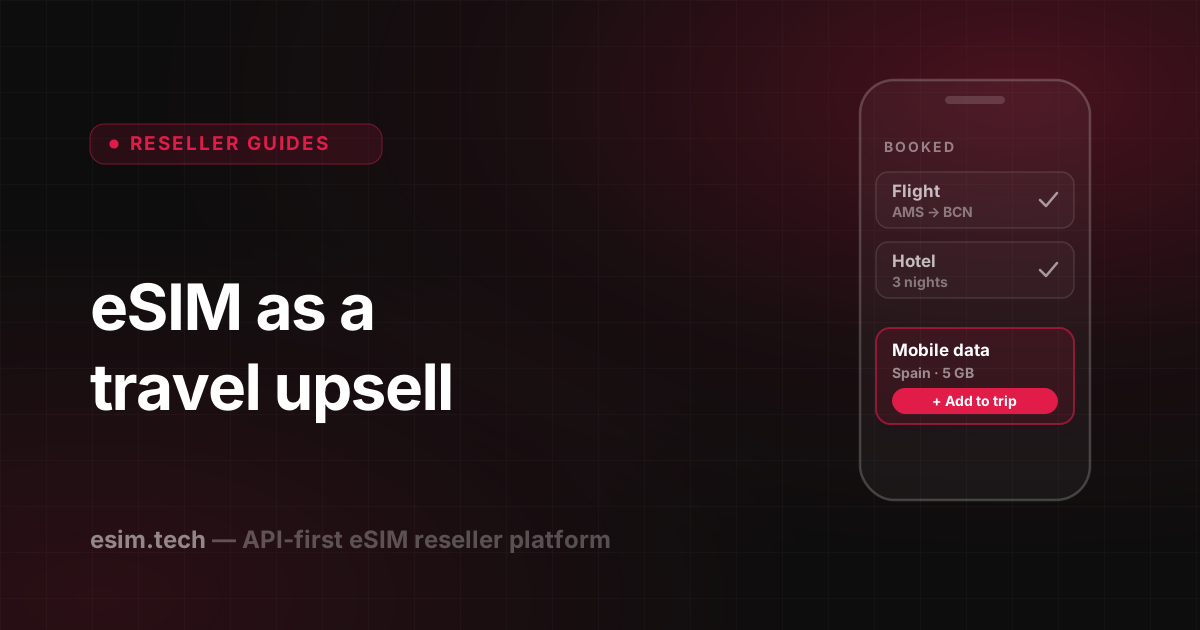
Airlines sell seats, bags and meals. Hotels sell breakfast and late check-out. Booking apps sell insurance and transfers. Each of them is an ancillary: a product attached to a purchase the customer is already making.
Mobile data at the destination fits that list well. Every traveller needs it, it’s fully digital, and you already know the destination and the dates. This guide explains how hotels, airlines and booking apps add eSIMs to their offer.
Why eSIM works as an ancillary
Ancillaries work best when they’re relevant to the trip, cheap compared to the main purchase and easy to say yes to. An eSIM checks all three.
It’s relevant, because the traveller is going somewhere their own plan is expensive or doesn’t work.
It’s small. A data plan costs a fraction of a flight or a hotel night, so it doesn’t make the customer rethink the booking.
And it’s easy. No shipping, no stock and no pickup point. The customer gets a QR code and installs it in a minute.
For you, it’s a product without logistics. With eSIM.tech there are no minimum orders and no contracts, and you pay only for the eSIMs you issue.
The right moment in the journey
Timing matters more than placement. The same offer converts very differently depending on when the traveller sees it.
- Right after booking. The customer is still in buying mode, and the destination is fresh in their mind. Show the eSIM on the confirmation page with the destination pre-filled.
- A few days before the trip. This is when travellers start thinking about practical things. Check-in emails and pre-arrival messages get read closely.
- On arrival. Some customers only think about data once they land and see a roaming message. An in-app offer or a QR code at hotel check-in catches them.
Most companies start with one moment, measure it, and add the next one later.
Where to place it
Airlines
Airlines have several touch points: the booking flow, “manage my booking”, online check-in and the boarding pass email. Check-in tends to work well, because the passenger is already preparing for the trip and the flight is a few days or hours away.
On long-haul routes, the in-flight Wi-Fi portal is another option. The passenger is online, has time and is about to land in a new country.
Hotels
A hotel’s strongest moment is the pre-arrival email, a few days before the stay. Add the eSIM next to airport transfers and room upgrades. For international guests, it’s often the most useful item in that email.
Guests on long stays, such as business travellers or guests in serviced apartments, sometimes need a local phone number for local apps and SMS verification. For them, a local eSIM with a real number in the country is the better offer.
Booking apps and OTAs
Online travel agencies and booking apps can show the offer at checkout, on the trip overview and in push notifications before departure. They have the most data: destination, dates, number of travellers and sometimes the type of trip. Use it to suggest the right plan size instead of showing a full price list.
How delivery works
The technical side is small. When the traveller buys the eSIM, your system calls the eSIM.tech API with the plan. The response comes back in about 120 ms and contains the QR code and the activation code (the LPA code).
You show the QR code on the confirmation screen and send it in your own email, under your own brand. The API integration guide walks through the calls, and webhooks let you follow data use so you can offer a top-up when the traveller runs low.
For trips through several countries, a multi-IMSI eSIM covers all of them with one QR code, so a city trip and a round trip use the same flow.
Pricing
Keep the offer simple. Two or three plans per destination are enough, named after the trip: a weekend, a week, unlimited.
Price it close to what the traveller would pay elsewhere. You win on timing and convenience, so there’s no need to undercut the cheapest app in the store. We go into margins in more detail in the reseller business model guide.
What to measure
Three numbers tell you whether the offer works.
- Attach rate: the share of bookings that add an eSIM. This shows whether the offer and the moment are right.
- Install rate: the share of sold eSIMs that are actually installed. A low rate usually means the instructions are unclear.
- Support tickets per 100 eSIMs: this tells you where travellers get stuck, so you can fix the instructions or the flow.
Watch these per channel and per moment in the journey, and you’ll quickly see where the offer belongs.
Getting started
Start with one channel and one moment, such as the confirmation email or the check-in flow. Run it for a few weeks, look at the attach rate, and then expand.
If you want to see what an eSIM offer could add to your ancillary revenue, contact our team and we’ll send you the pricing within one business day.
Why would an airline or hotel sell eSIMs?
Because the traveller needs mobile data at the destination anyway, and the airline or hotel already knows where and when they're going. An eSIM is a digital ancillary with no stock and no logistics, and it earns a margin on every sale.
When is the best moment to offer an eSIM?
Right after booking and again shortly before the trip. After booking, the traveller is still in buying mode. Before the trip, around check-in or pre-arrival, they're thinking about practical things like data abroad.
How long does it take to deliver the eSIM after purchase?
With eSIM.tech, the API returns the QR code and activation code in about 120 ms, so it can be shown on the confirmation screen and sent in the same email.
Do customers see the eSIM provider's brand?
No. The eSIM is white-label. The traveller sees your brand on the offer, the confirmation and the installation instructions.